The padel racket market in 2026 is crowded, noisy and often more confusing than it needs to be. Dozens of brands compete for attention, with models ranging from entry level to tour setups. Many players still buy a racket that does not match their real level. The good news is simple: if you understand shape, balance, weight and core feel, you can make a far better decision in minutes than any slogan on a product page will ever make for you.
Shape: round, teardrop or diamond
Racket shape is not just a style preference. It moves the sweet spot and changes how large the forgiving contact zone feels. That is why two rackets can look similar in photos and still play completely differently on court.
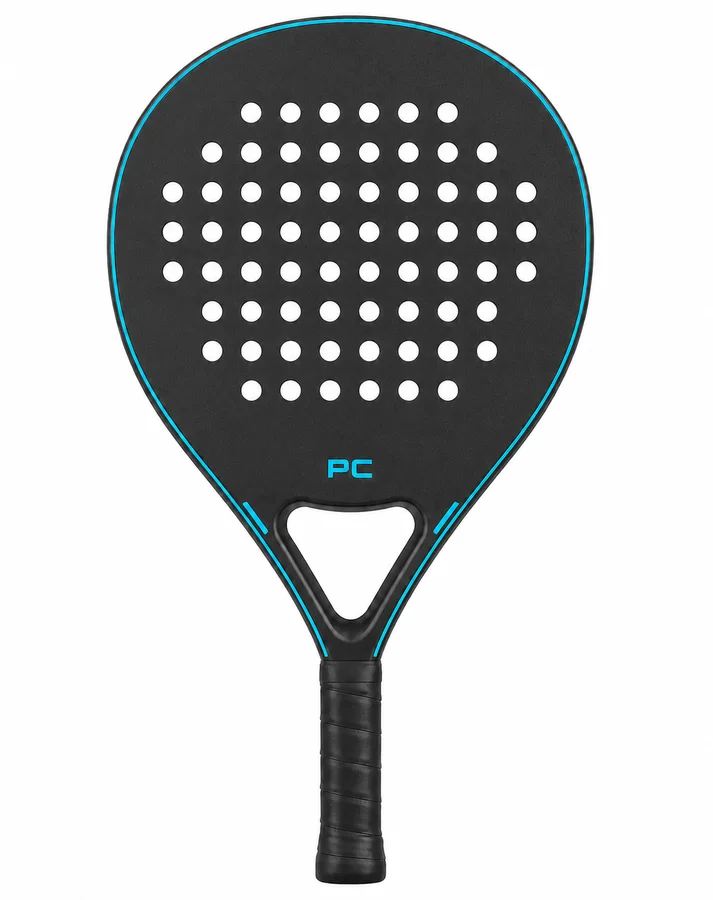
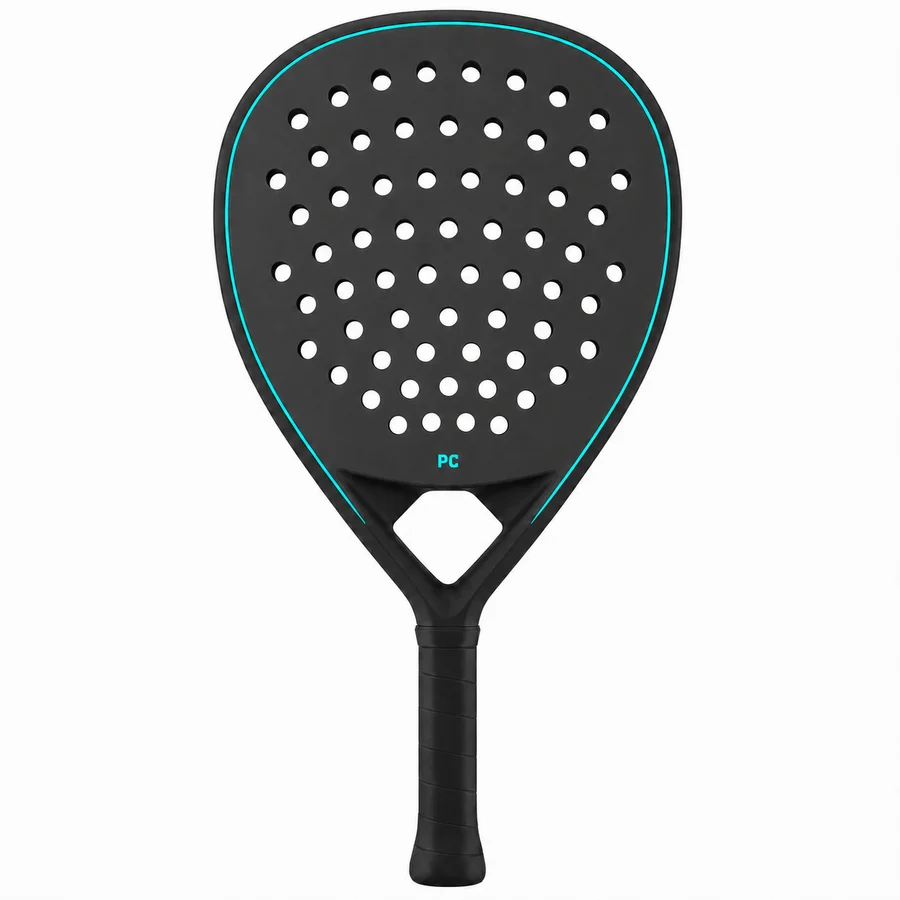
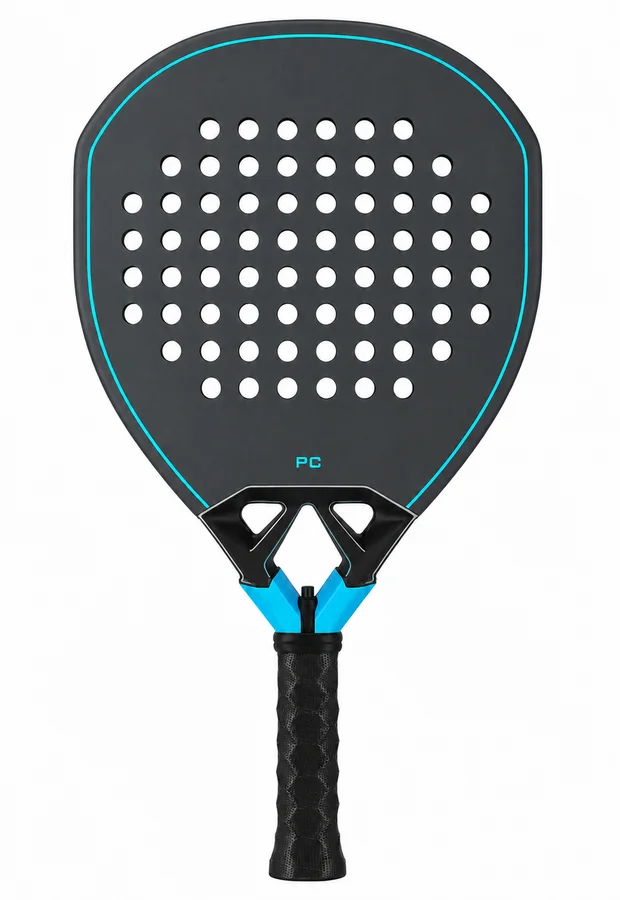
Drag to rotate
Round
Large sweet spot, strong control and a generous margin for off-center contact. This is the safest starting point for most beginners.
- Sweet spot
- central
- Balance
- usually low
- For beginners
- excellent
Teardrop
The balanced middle ground between control and power. A strong option once you already have some timing.
- Sweet spot
- slightly higher
- Balance
- medium
- For beginners
- good with basics
Diamond
More power, smaller sweet spot and much less forgiveness. For beginners, this is usually the riskiest category.
- Sweet spot
- high
- Balance
- high
- For beginners
- rarely ideal
A round racket forgives. A diamond racket rewards. Beginners usually benefit more from forgiveness.
As the sweet spot moves higher, the comfortable contact zone becomes smaller. A diamond racket can feel explosive on clean impact, but it punishes slight errors in timing much more. That is why shape should be your first filter.
Balance: where the center of mass sits
Balance tells you how far the racket’s center of mass sits from the handle. Two rackets with the same overall weight can therefore feel completely different. One turns quickly and feels easy to guide, the other feels heavy in the head.
- Low balance: center of mass closer to the handle, strong control and easier handling.
- Medium balance: a versatile middle ground that suits many club players.
- High balance: more mass in the head, more punch, but also more load on elbow and shoulder.
Swingweight describes how much rotational inertia you feel during the swing. A racket can look manageable on paper yet feel demanding if too much mass sits high in the head. That is why weight alone never tells the full story.
Weight: what range makes sense
Most padel rackets live somewhere between 350 and 385 grams. For beginners there is no magical number, only a sensible fit based on body strength, technique and playing frequency.
Lighter players and juniors
Often most comfortable around 355 to 365 grams.
Most adult beginners
Frequently well served in the 365 to 375 gram range, provided balance and core remain comfortable.
Stronger attacking players
Only start looking above 375 grams when your technique and arm stability are already reliable.
More weight does not automatically create more power. If you cannot accelerate the racket cleanly, shot quality drops. For many club players, slightly less weight actually produces better depth and more repeatable timing.
Core: EVA Soft, Medium, Hard and FOAM
Inside every padel racket sits a foamed core, usually EVA or FOAM. Its density affects comfort, rebound and the overall feel at impact.
EVA Soft
Comfortable, damped and friendly on imperfect contact. A strong starting point for beginners.
- Control
- high
- Power
- moderate
- Best for
- beginners
EVA Medium
The versatile middle ground with a balanced mix of comfort and response.
- Control
- medium
- Power
- medium
- Best for
- club players
EVA Hard
Direct, firm and much less tolerant. This setup asks for cleaner timing and stronger arms.
- Control
- lower
- Power
- high
- Best for
- advanced attacking players
FOAM often feels a touch softer and appears regularly in comfort-focused models. For most beginners the best progression is straightforward: start soft or medium, then think about harder cores later.
Surface and finish
The hitting surface is usually built from fiberglass or carbon. Fiberglass feels softer and more damped. Carbon feels crisper and more direct, but also more demanding.
- Fiberglass: more forgiving, often cheaper, very common in beginner and mid-tier models.
- Carbon: stiffer, sharper in response, often used in performance-oriented rackets.
- Rough finish or 3D texture: can help spin, but it wears down with playing hours.
A rough finish is a useful extra, not the main buying criterion for beginners. Shape, balance and core feel remain more important in almost every case.
Myth or truth: left-handed players and diamond shapes
You often hear that left-handed players should automatically use diamond rackets, especially on the left side. That is far too simplistic. Shape does not follow handedness. It follows the role you actually play on court.
Players on the more aggressive side often choose more demanding setups with a higher sweet spot. That comes from tactical role, not simply from being left-handed or right-handed. For beginners, this question is usually secondary.
If you are still learning, choose based on shape, balance, weight and core. Your doubles role becomes clearer only after you gain more court time.
Price tiers and what they really add
Often fully sufficient for a first serious season.
Usually better materials, more refined cores and cleaner feel.
More specialization, less forgiveness and often more cost than value for beginners.
The classic beginner error is not spending too little. It is spending too much on a professional model that does not fit real ability. A well-matched mid-range racket usually beats an expensive pro setup for developing players.
A ten-minute on-court test
If your club offers test rackets, use them. Ten focused minutes are enough to avoid very expensive mistakes.
Hit baseline shots.
Pay attention to comfort, vibration and overall contact quality.
Test volleys.
Does the racket stay stable or does it twist too easily in your hand?
Try bandejas and smashes.
This is where weight and balance reveal themselves very quickly.
Add wall situations.
Backcourt shots show whether the sweet spot really helps your timing.
Monitor your arm.
If elbow or shoulder complain after a short test, take that warning seriously.
The five most common buying mistakes
Too heavy, too stiff, too head-heavy
A professional setup can create more frustration than progress in year one. Comfort usually beats ego.
Buying without testing
Product pages help, but a short on-court test helps much more. Real impact feel is hard to judge online.
Choosing branding over fit
A pro endorsement does not mean the racket fits your level. Your current game still matters most.
Ignoring grip and overgrip
A simple overgrip can noticeably improve comfort, hygiene and control. It is part of the setup too.
Trying to fix technique with a new racket
A new model rarely solves a technical problem. Two coaching sessions often do more than any purchase.
Sources
Manufacturer specs, official player profiles, equipment analysis and specialist articles from the padel scene. Pricing checked in April 2026.
Still unsure which racket really fits you?
Our Racket Finder asks a few short questions and suggests models that fit your level, playing style and budget.
Go to the Racket Finder arrow_forward